I work on understanding the formation of galaxies, and particularly the extreme objects we find at their centers, nuclear star clusters and massive black holes. I use dynamical and stellar population analysis applied to both imaging and spectroscopic data from telescopes including the James Webb Space Telescope, Hubble, and the Very Large Telescope.
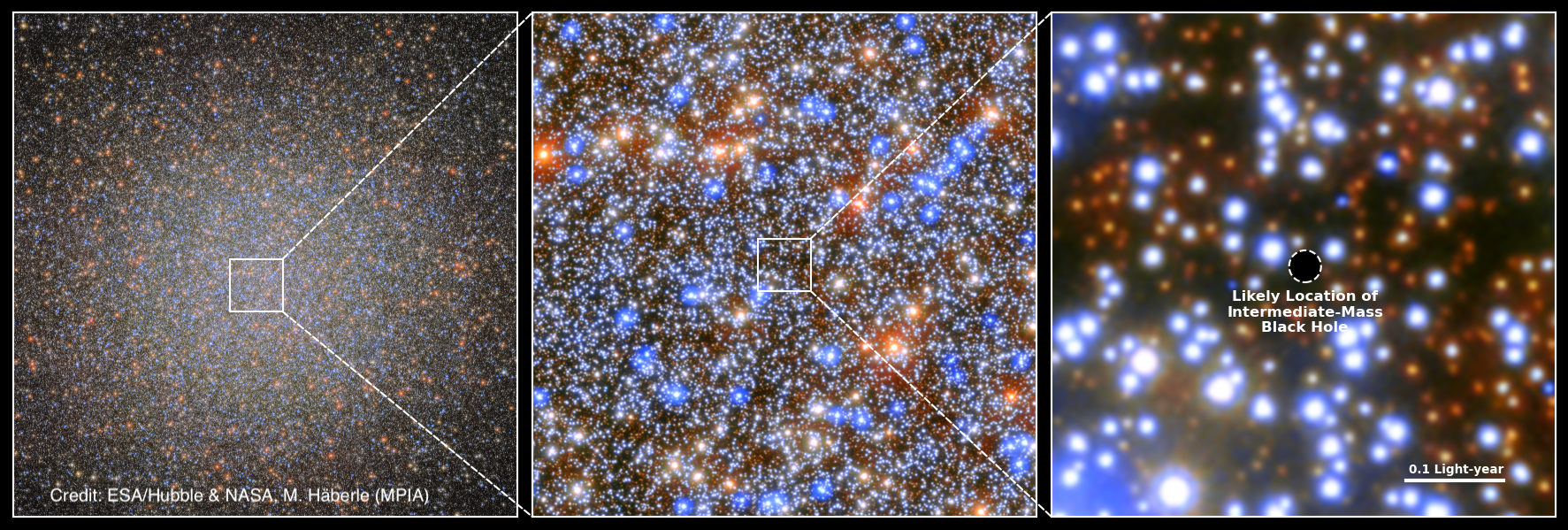
Omega Centauri is the Milky Way’s most massive globular cluster and is the remnant nucleus of a dwarf galaxy. We have combined Hubble Space Telescope Imaging and Astrometry with VLT/MUSE spectroscopy to study the central regions of the cluster and uncover its history. This project has found the nearest massive black hole to us and revealed the ages and compositions of omega Cen's stars.
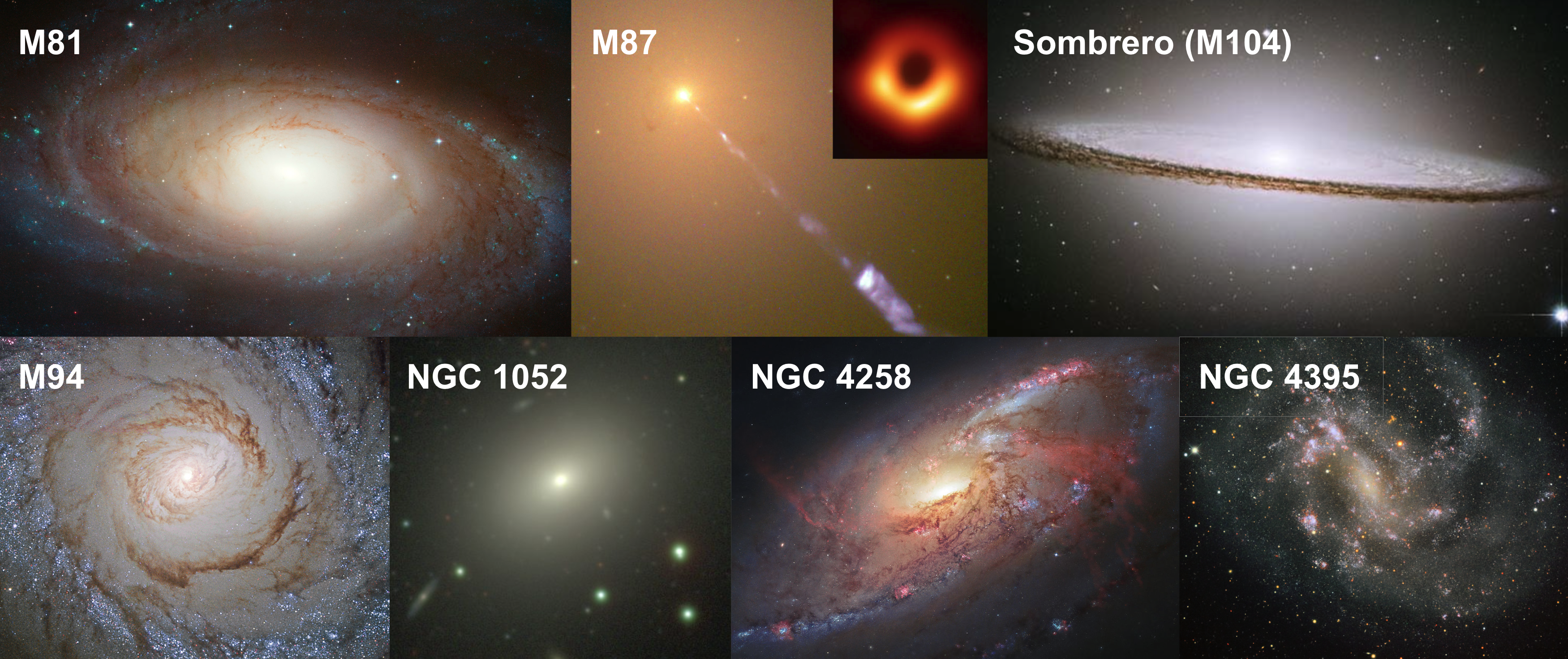
The Revealing Low-Luminosity AGN (ReveaLLAGN) project focuses on black holes at the centers of nearby galaxies. These black holes are not actively accreting large amounts of material, but are instead sipping just a little gas, and thus are not very bright. The James Webb Space Telescope enables us to clearly separate the accreting black hole from its surrounding galaxy in the infrared for the first time, helping us understand the physics of black hole accretion and how they interact with their surroundings.
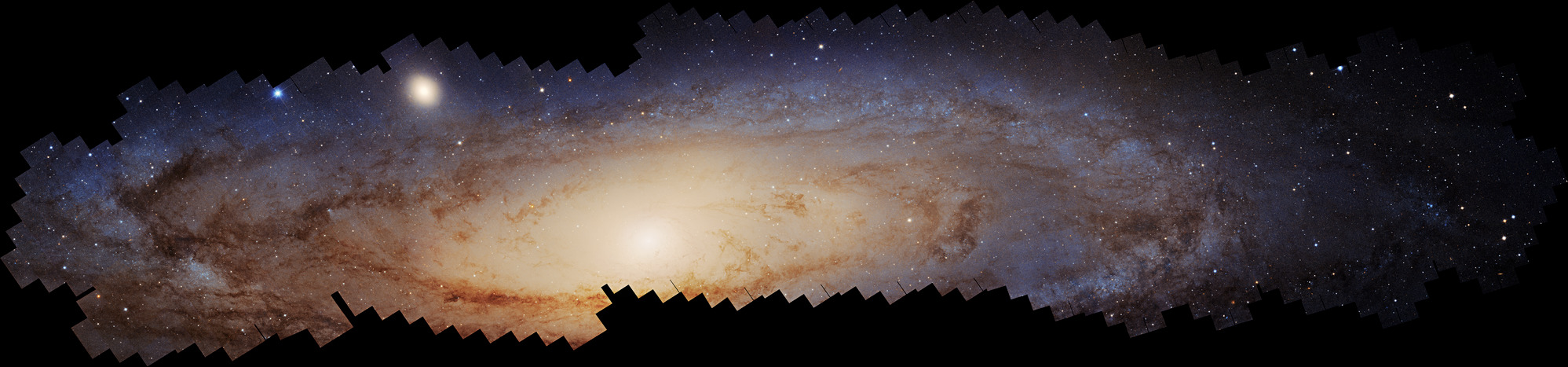
Hubble’s M31 PHAT+PHAST mosaic. Credit: NASA, ESA, Benjamin Williams (University of Washington), Zhuo Chen (University of Washington), L. Clifton Johnson (Northwestern University); image processing: Joseph DePasquale (STScI).
Resolved stars · M31 + M33
Surveys of Andromeda and Triangulum
I've been involved in large Hubble Space Telescope surveys of our nearest neighboring galaxies, Andromeda (M31) and Triangulum (M33). These surveys enable us to resolve hundreds of millions of stars in these galaxies and reveal their formation histories. The image at left is from the combined PHAT+PHAST mosaic of Andromeda.
Citizen science
Searching for star clusters
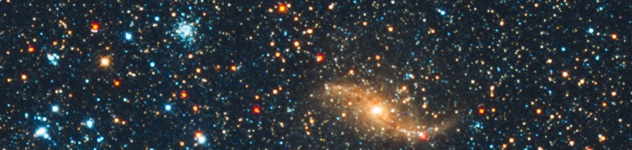
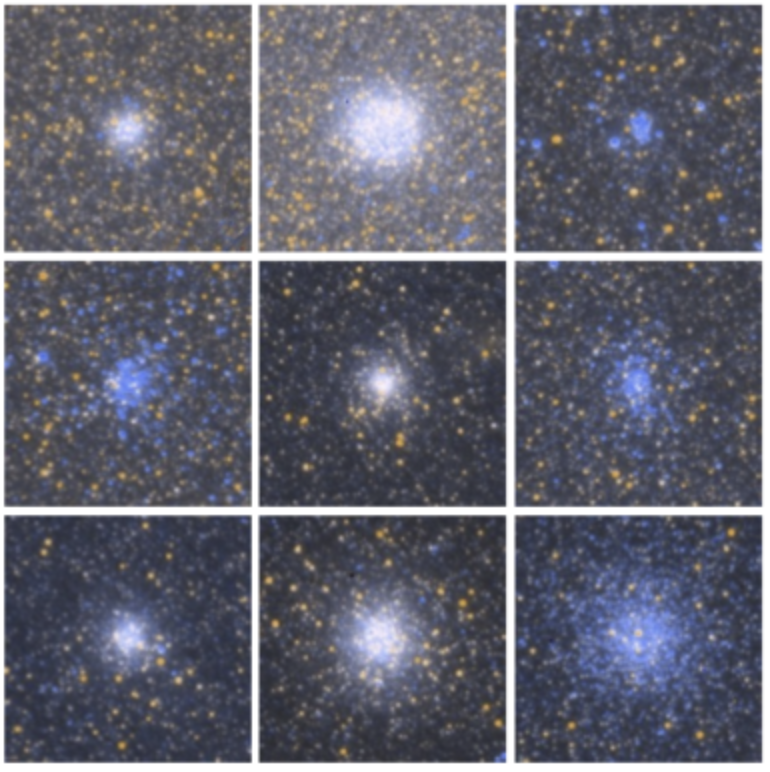
Public volunteers helped search thousands of images of Andromeda and Triangulum to help identify star clusters, stars born at the same time. These star clusters help us understand the process of star formation and the history of these galaxies.